
There are various types of web hosting options out there, and choosing the right one for your website isn’t always a straightforward process.
When weighing your options, here’s a quick rule of thumb:
- Shared web hosting. A cost-effective solution for portfolio websites and basic blogs that don’t require a lot of server resources and computing power.
- VPS hosting. A virtual dedicated server for more flexibility and resource allocation than shared hosting. Perfect for tech experts looking to host multilayered websites or web applications.
- Dedicated hosting. Offers an entire server dedicated to a single website, maximizing control and resources for large corporations with large budgets.
- Cloud hosting. Utilizes multiple servers to ensure greater reliability and scalability for medium to large-scale ecommerce stores.
- Managed WordPress hosting. Specifically made for WordPress users who don’t want to deal with cumbersome technicalities, putting their focus entirely on their content.
- Agency hosting. Designed for web professionals managing multiple client websites.
- Reseller hosting. Allows entrepreneurs, freelance web developers, or agencies to purchase hosting services and resell them to others.
- Colocation web hosting. Similar to dedicated hosting, except that clients have to provide their own hardware, housed in a provider’s data center.
- Ecommerce hosting. Designed for online stores, offering ecommerce-specific tools and additional security options.
1. Shared hosting
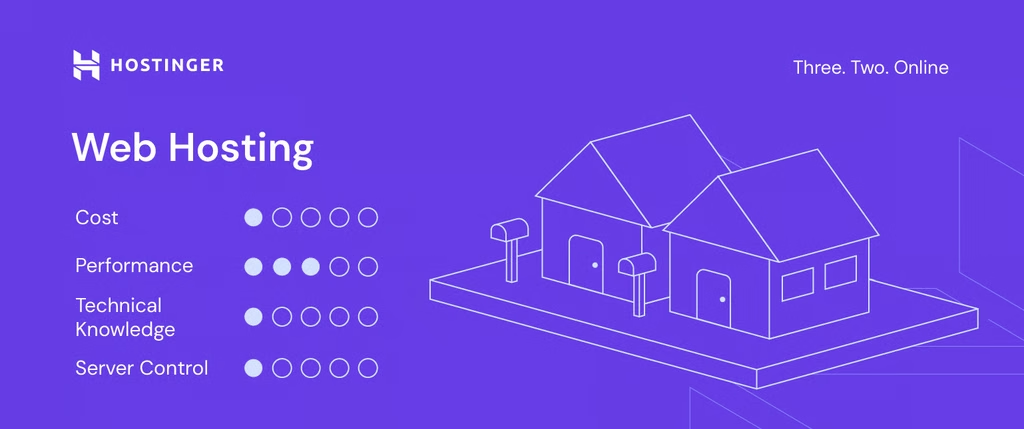
Shared hosting is a hosting type that allows multiple websites to share the same server resources, including storage space, RAM, and CPU. Such a setup optimizes server resources and cuts costs, making shared hosting a popular choice for owners of small websites and businesses who are just starting their online journey.
Advantages
One of the main benefits of shared hosting is that it’s more cost-effective because the price of running a whole server is split between multiple users.
Therefore, shared hosting is usually more affordable than other web hosting options. Find the complete pricing comparison in our web hosting cost guide.
Shared web hosting is also known for its user-friendliness. Most shared hosting providers offer beginner-friendly control panels that make website management a breeze. The simple setup process allows website owners to focus on content rather than technical website tasks.
Disadvantages
Shared web hosting comes with a set of challenges.
The shared environment means that your website’s performance can be affected by the resource demands of other websites hosted on the same server. During peak traffic times, your site might experience slower loading times or reduced responsiveness.
Shared hosting can restrict server access and customization, posing limitations for users needing specific website setups. Security concerns may also arise, as a vulnerability in one website could potentially be exploited to affect others on a shared server.
Best For
Given its characteristics, shared hosting is an excellent web hosting solution for small businesses, beginner web builders, or personal blogs that don’t expect high traffic volumes. It provides a good balance between cost and ease of use, making it a suitable first step for many in establishing an online presence.
2. Virtual Private Server (VPS) hosting
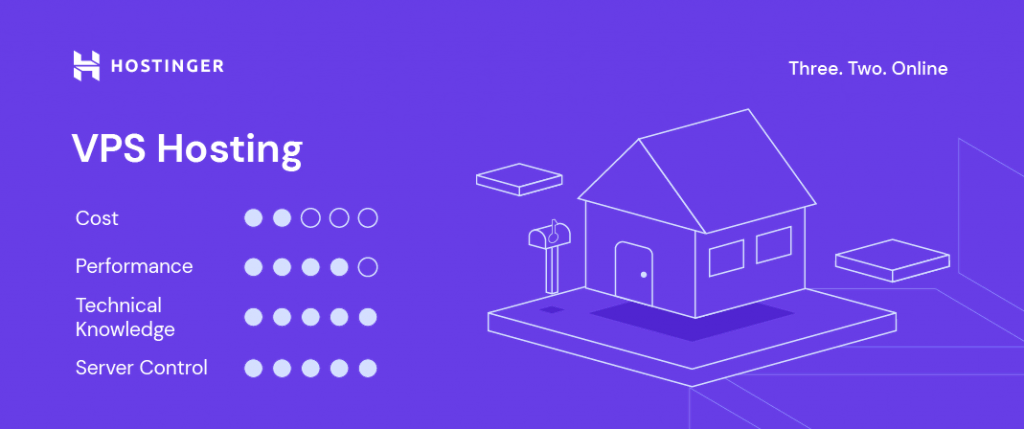
Virtual private server (VPS) hosting is the intermediary option between shared and dedicated hosting solutions.
It creates separate virtual spaces for each user on a single physical server. Although one physical server is shared, each virtual server gets its own set of resources, ensuring that the hosted websites don’t compete for these resources.
As a result, website owners can benefit from a more isolated and controlled hosting environment. Using a VPS is similar to owning a server, but at a fraction of the cost of a dedicated hosting plan.
If you want to get a better understanding of what VPS hosting is and how it works, check out our comprehensive tutorial on the topic.
Advantages
The primary benefit of VPS hosting lies in its enhanced flexibility and resource availability.
With virtual private server plans, site owners have increased control over their space, with the ability to install and manage their software and operating systems. They also get a higher allocation of resources, which are easily scalable to cater to the site’s growth.
Disadvantages
The increased power and flexibility of VPS hosting require a higher level of technical expertise. Managing a VPS involves a deeper understanding of server administration, software configurations, and security protocols.
Moreover, while VPS offers better scalability options compared to shared hosting, it has its limits compared to dedicated servers. For very high-traffic or demanding apps, there may be better web hosting options than virtual private servers.
Best For
VPS hosting is particularly suitable for websites that have outgrown shared hosting limitations but still need a dedicated server.
It’s an excellent choice for growing businesses, ecommerce sites, and content-rich websites that need more resources and control over their web hosting environment to ensure optimal performance, security, and scalability.
VPS hosting offers a balanced and cost-effective solution for websites in this transitional phase of growth and development.
3. Dedicated server hosting
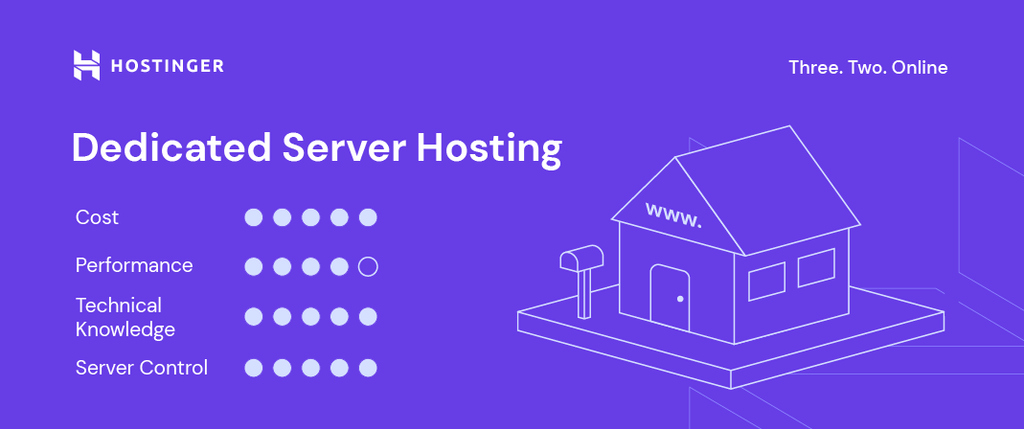
Dedicated hosting offers the exclusive use of an entire physical server for a single client. This hosting model provides the ultimate level of control, performance, and security, as website owners are not required to share any of the server’s resources with other clients.
With dedicated resources, website owners have the freedom to tailor every aspect of the server, including the choice of their operating system, hardware configurations, and software installations. This flexibility ensures every client’s specific requirements are met.
Advantages
Having dedicated resources allows websites to handle substantial traffic volumes and complex processing without the risk of performance degradation that can occur with a shared server.
Dedicated hosting also offers enhanced security solutions. Site owners can implement web security measures tailored to their specific needs without being affected by the vulnerabilities of other users on the same web server.
This level of control and customization makes dedicated servers an ideal choice for businesses with unique software requirements or those that must comply with specific regulatory standards.
Disadvantages
The exclusivity and high performance of dedicated server hosting come at a cost, financially and in terms of management.
Dedicated hosting is significantly more expensive than the shared or VPS solution. As a result, this type of web hosting is less accessible for smaller businesses or website owners with limited budgets.
In addition, managing a dedicated server requires a considerable degree of technical expertise. Clients are responsible for server maintenance, updates, security, and troubleshooting, which can be a daunting task without the necessary technical skills.
Managed hosting services can relieve some of these burdens, although they come at an additional cost.
Best For
Dedicated hosting caters to organizations with specific performance requirements, including those that handle sensitive data and require enhanced web security measures.
For entities that prioritize reliability, performance, and security above all else and are willing to invest in the necessary resources and expertise, dedicated server hosting offers the most comprehensive and robust website hosting service available.
4. Cloud hosting
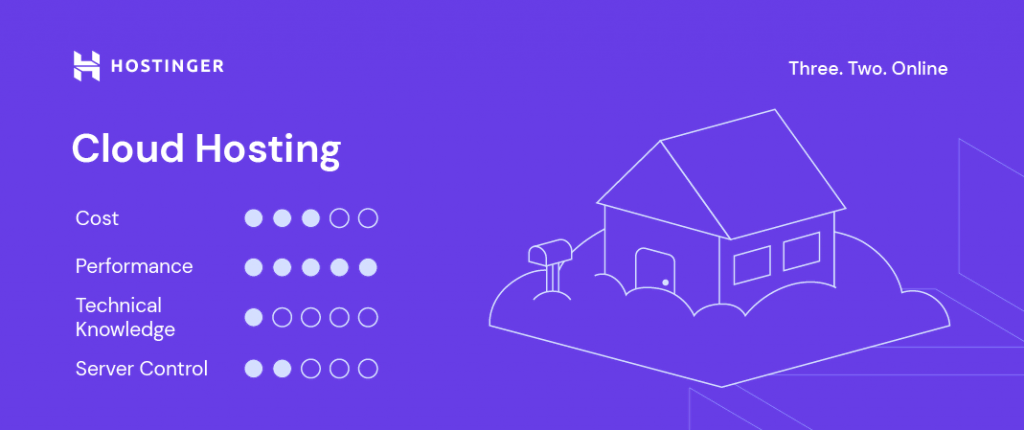
Cloud hosting offers a shift from traditional hosting models. It leverages the power of cloud computing to provide a highly scalable and flexible solution.
This type of website hosting works across a network of interconnected virtual servers, which collectively handle the hosting load. It allows for seamless resource allocation and redundancy, ensuring high reliability and performance levels, even during fluctuating traffic periods.
Advantages
Cloud hosting’s pay-as-you-go pricing model is one of its compelling advantages. This payment approach means businesses only pay for the resources they consume.
Additionally, cloud hosting plans offer the ease of scaling resources with minimal to no downtime. Such flexibility ensures that websites can quickly adapt to traffic spikes or decreases.
Explore an in-depth tutorial to gain insights into the concept of cloud hosting and its potential to enhance website performance and scalability.
Disadvantages
On the downside, cloud hosting’s scalability can lead to unexpected costs if not carefully monitored. The pay-as-you-go model, while flexible, requires a clear understanding of your resource usage patterns to avoid surprise expenses.
The multi-tenant nature of cloud environments may raise concerns regarding data security and privacy. Please confirm with your cloud hosting provider if they have implemented robust security measures to mitigate these risks.
Best For
Cloud hosting best suits business websites with fluctuating traffic. Leveraging cloud servers, it’s one of the best web hosting options for ecommerce platforms, large-scale projects, and web applications needing to manage sudden traffic spikes without performance impact.
How secure is cloud hosting?
Cloud hosting is very secure, thanks to its decentralized infrastructure. This setup enhances data security and privacy, as it requires the development of specific security protocols tailored for cloud environments. Its integration with edge computing and AI is also expected to improve its security capabilities further